Key takeaways
- Your memory of a year is really your memory of the last three months. Walk the months in order.
- One minute per month is enough if you say it out loud instead of writing it.
- Personal Diary turns the walkthrough into a readable entry; the one-page summary is your job.
- Keep, stop, one thing — with the sentence that proves each one.
Year reviews fail for the same reason weekly reviews do, only worse. By December, the year has collapsed into its final quarter: the project that ended in October, the job that changed in June, the thing you meant to start in February are all gone. You write a review of the last three months and call it a year.
The fix is mechanical. Walk the months in order, out loud, before you decide anything. Speaking is fast enough to cover twelve months in half an hour, and it captures the details that a blank page loses.
How to do it in VoiceNote
Step 1 — Walk the year month by month
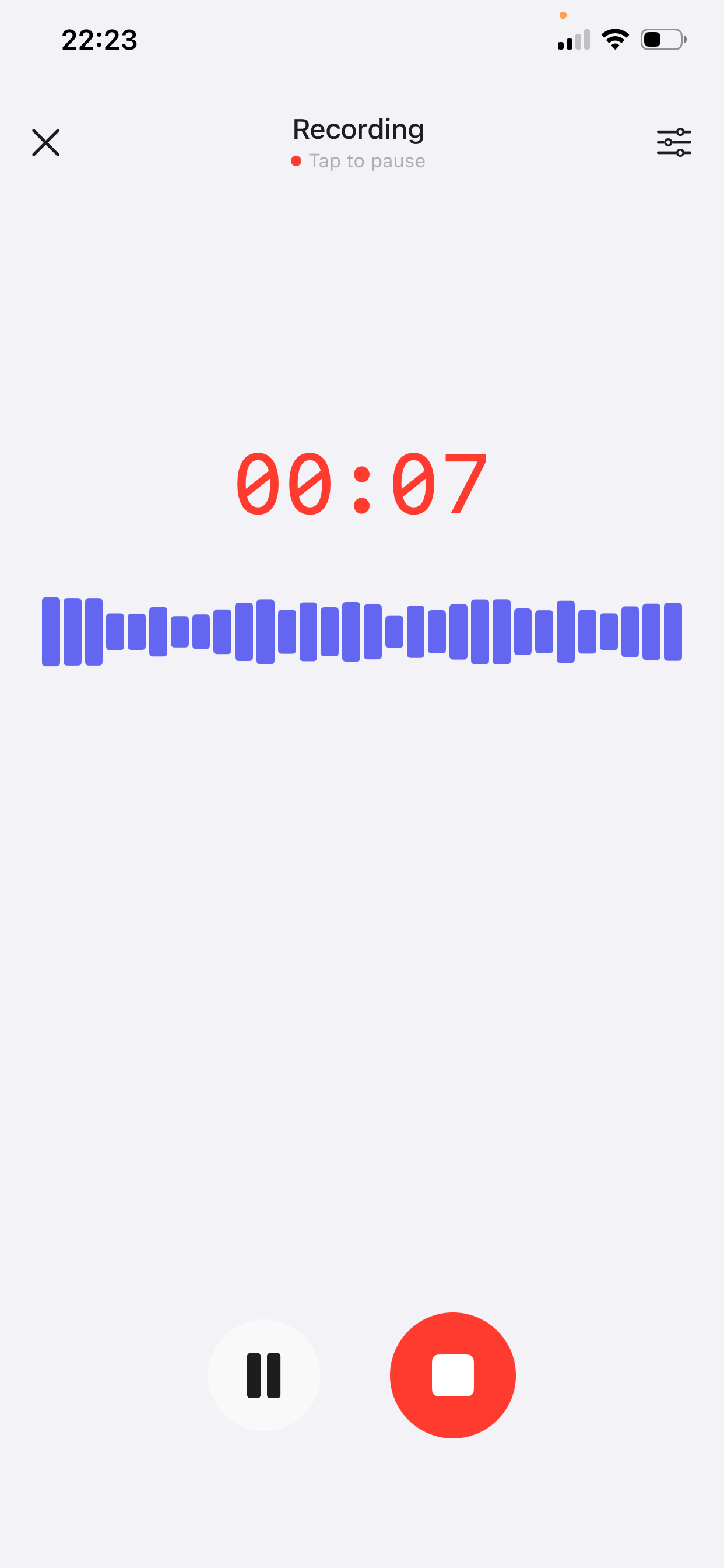
Book thirty minutes, open VoiceNote and tap the mic. Go in order — January to December — and give each month about a minute: what happened, what you shipped, what broke, who you were working with. The free plan records up to two minutes per note, so either record in quarters (three months per note) or use Prime, where a single recording runs to fifteen minutes.
- Say the month, then the memory. “March — that was the migration, and I was travelling for two weeks of it.” The label keeps the walkthrough in order when you read it back.
- Numbers out loud. Revenue, headcount, hours, the number of times you said yes when you meant no. They are the first thing to vanish from memory.
- Include the months with nothing in them. Three quiet months is a finding, not a gap.
- Say what you felt, not just what happened. “I was relieved when that ended” is the raw material for the one page you will write later.
Step 2 — Apply Personal Diary
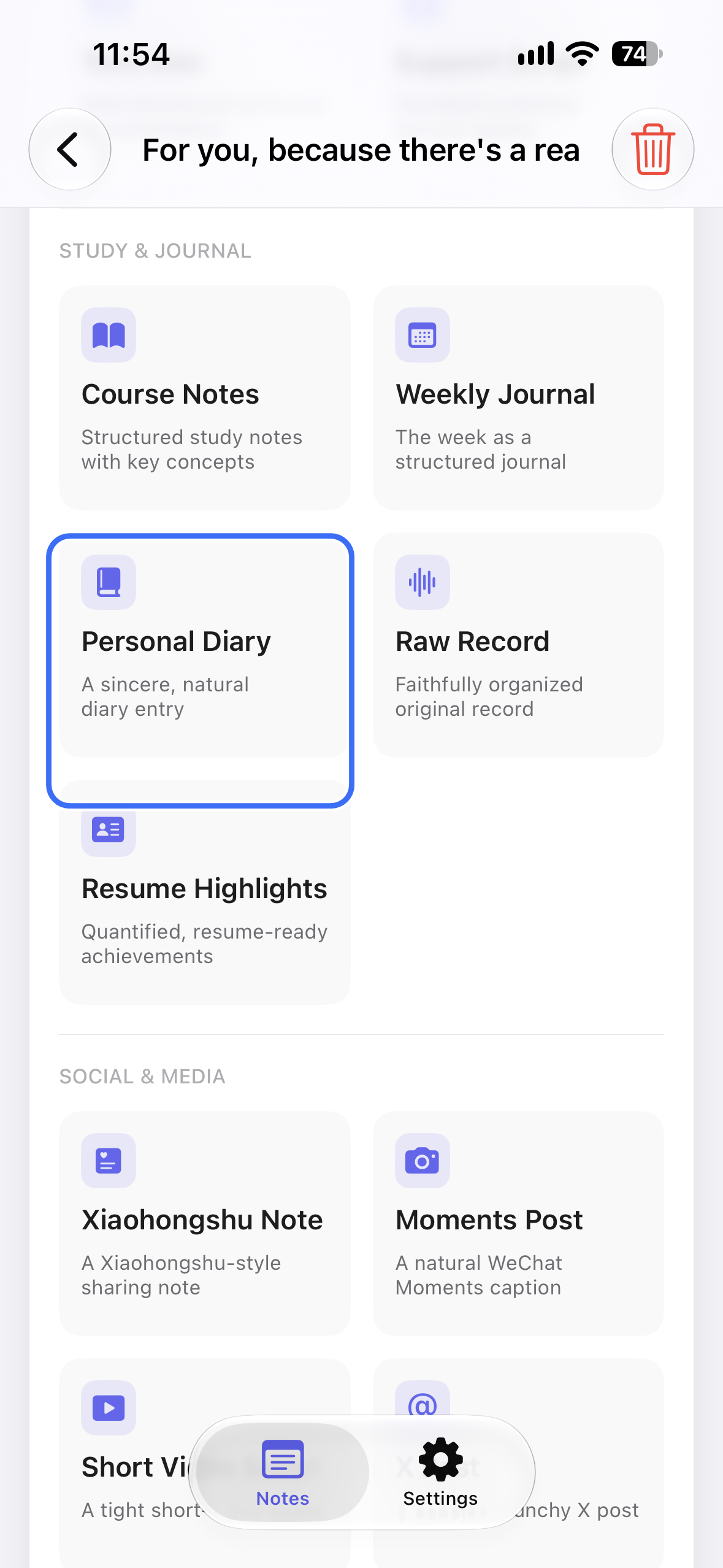
Open the note, tap AI Style Conversion and choose Personal Diary. The style turns a rambling walkthrough into a sincere, natural diary entry — readable prose in your own voice, in the order you said it.
Read it once without editing. The point of the first read is to notice what surprised you: the months you had forgotten, the project that took four months instead of six weeks, the thing you kept saying yes to. That noticing is the review.
The style will not tell you what the year meant, and it will not check your numbers. Correct the facts, then keep the entry as the long version — the one you will reread in a bad week in March.
Step 3 — Cut it to one page: keep, stop, one thing
From the entry, write three short lists. Under each item, paste the sentence from the recording that supports it.
- Keep — what worked and should survive into next year, with the evidence for why.
- Stop — what cost more than it returned, including the commitments you cannot remember agreeing to.
- One thing — the single change you would regret not making, phrased as an action, not an intention.
One page is the limit, not a target. If it does not fit, the year did not have three priorities — it had a list, and lists are what you are trying to escape.
Why a year collapses into its last quarter
Memory is not a recording; it is reconstructed each time you recall something, and recent events are the easiest material to reach. That is why a year in December feels like October, November and the last thing that happened.
The other distortion is the ending. How a project finished colours how you remember the whole project, and a bad December can erase eleven decent months. Walking the months in order interrupts both: you cannot skip to the conclusion if you have promised yourself a sentence about May.
A recording also keeps your own voice from a year ago — the things you were worried about in February, the sentence you were proud of in July. A written summary flattens all of that into the mood you were in when you wrote it.
A worked example
A made-up example. A product manager records the walkthrough on a Sunday afternoon in December.
Spoken walkthrough (excerpt)
“February: the pricing change. It took three weeks of meetings and it worked — churn went down and nobody complained, which I did not expect. April: nothing. I remember April as grey; I think I was waiting for the new designer to start. June: we shipped the onboarding rebuild, eight weeks late, and the number did not move at all, which is the thing I still think about. September: I said yes to the conference talk and then spent two weekends on slides I never used. December: we hit the target, but I mostly remember being tired.”
One page, after the entry
Keep
Small, boring changes with a number attached — the pricing change took three weeks and moved churn. “It worked — churn went down and nobody complained.”
Stop
Saying yes to talks before the slides exist. September cost two weekends for slides I never used.
One thing
Set an eight-week limit on any rebuild, and review the metric in week four — not at launch. “Eight weeks late, and the number did not move at all.”
What changed: the year has a shape now, and each item on the page has the sentence that justifies it.
Before you close the year
- Re-read the entry in January, not in December. The distance is what turns notes into a decision.
- Keep the recording. A year from now, your voice from this year is more useful than the summary of it.
- Write the one thing where you will see it. A page you file is a page you will not act on.
Mistakes to avoid
- Reviewing only the last quarter. If the walkthrough starts in September, you are writing a quarterly review.
- Trying to be fair to every month. You are looking for patterns, not an audit.
- Turning it into a list of failures. “Keep” is not decoration; it is where next year's energy comes from.
- Writing intentions instead of actions. “Be better at saying no” is a mood; “no new talks before slides exist” is a rule.
- Skipping the evidence line. Without it, the page becomes the story you would like to tell.
Frequently asked questions
How long should a year in review recording be?
Twenty to thirty minutes is plenty — roughly a minute per month plus a few for the ones that mattered. Longer recordings rarely produce a better page.
Can VoiceNote transcribe a full walkthrough in one go?
A single recording stops at fifteen minutes with Prime and two with the free plan, so record in quarters and treat the four notes as one walkthrough.
How is this different from a weekly review?
A weekly review is a process check — what moved, what stalled, what is next. A year in review is about shape and direction: what to keep, what to stop, and the one thing worth changing.
Should I do this before or after New Year?
Before is better. Decisions made in a rush on the first of January are usually last year's habits with a new date.
What if I cannot remember the early months?
Use your calendar, bank statement and sent mail as prompts, and say what you find. “I have no memory of April except a cancelled trip” is a legitimate entry.
Which languages does VoiceNote support?
VoiceNote transcribes 46 languages. Record in whichever language you think in; style names in the app stay in English.
If a year feels like too much to start with, try a short daily entry first — twelve months of them make this walkthrough much easier.
Review the whole year, not the last quarter
Download VoiceNote, record a month-by-month walkthrough of your year, and turn it into one page you will actually reread.
Download on the App Store