Key takeaways
- A weekly review is three questions: what moved, what stalled, what is next.
- Record it on Friday, in one sitting, before the week gets rewritten by memory.
- Weekly Journal turns the recording into a dated, structured entry.
- A messy review you finish beats a perfect one you skip.
Most people do not need another system. They need fifteen minutes on Friday where they look at the week that actually happened instead of the one they planned. That is the whole review: what moved, what stalled, what is next.
Writing it down invites editing — you start tidying the week into a version that sounds reasonable. Saying it out loud is faster and less flattering. Both of those are advantages.
How to do it in VoiceNote
Step 1 — Book fifteen minutes on Friday
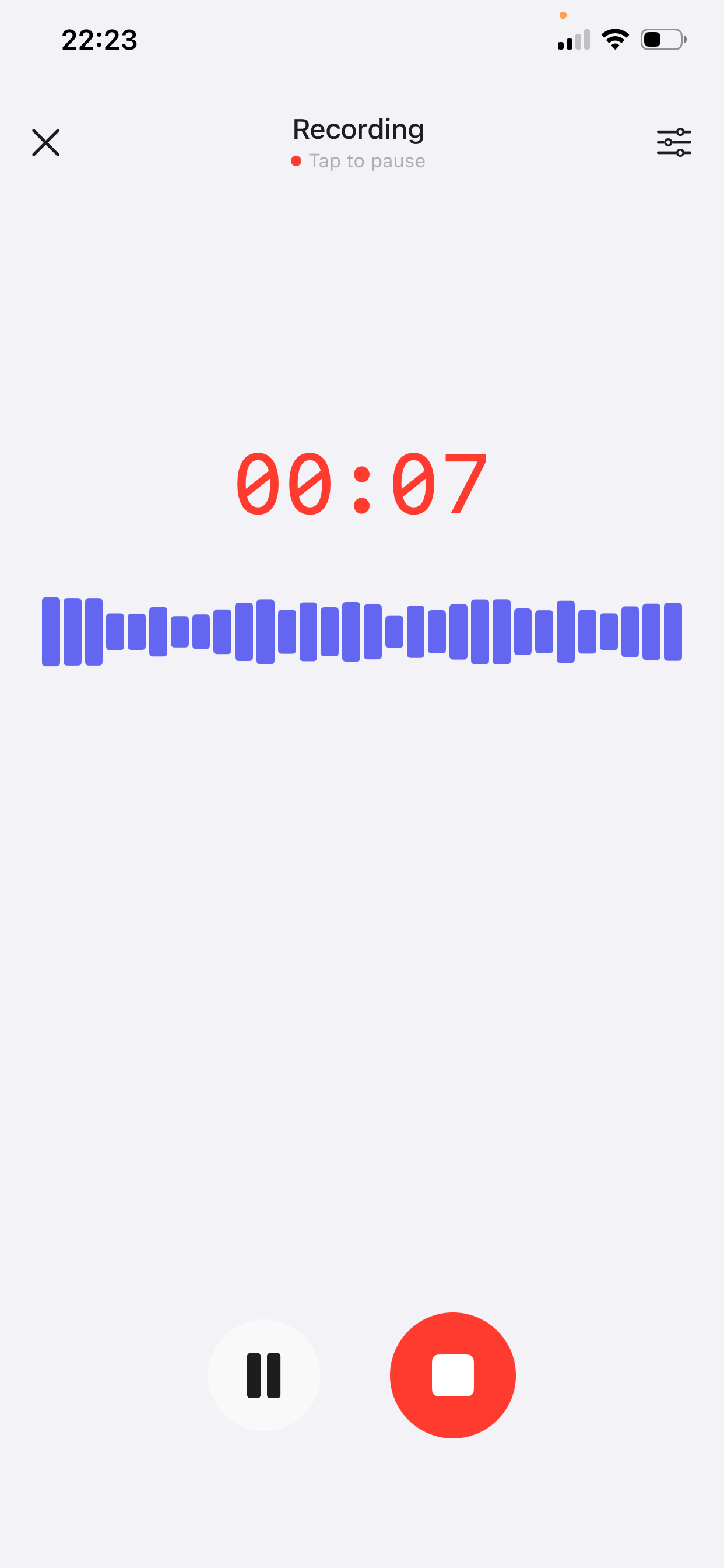
Pick a time before the week ends, ideally before you close the laptop for the weekend. Open VoiceNote, tap the mic and talk through three questions in order: what moved, what stalled, what is next. The free plan records up to two minutes per note; Prime extends a single recording to fifteen, which is enough for one review in one take.
- Start with what moved. Not everything you did — the two or three things that are genuinely further along than they were on Monday.
- Say what stalled, and why. “The pricing page slipped because legal came back twice” is useful in March. “Busy week” is not.
- Say what you avoided. The task that moved from Monday to Wednesday to next week is the most important thing in the review, and the easiest to leave out.
- Finish with next week, in your own words. Three priorities, said aloud, is a plan you will remember without opening the note.
Step 2 — Apply Weekly Journal
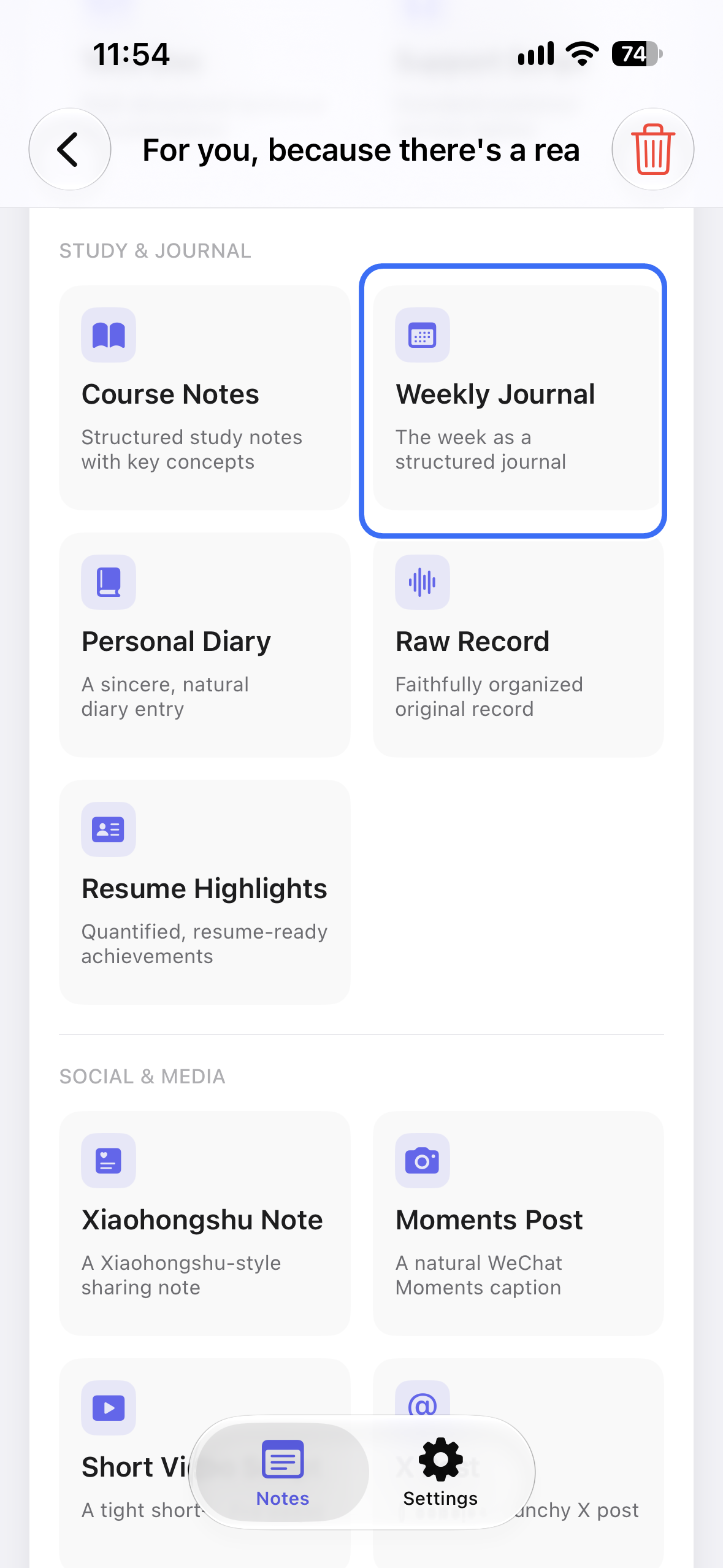
Open the note, tap AI Style Conversion and choose Weekly Journal. The style turns the recording into a structured weekly entry: the week's events grouped and dated, rather than one long paragraph of whatever came out first.
The style organises what you said; it cannot tell you what mattered. That judgement is the review. If the entry reads as a list of activity with no verdict, you have not reviewed anything yet — go back and add one sentence per item saying whether it is better or worse than last week.
It also cannot know which stalled item is stalled for a good reason. Say that out loud in the note (“we are waiting on the vendor, not on me”) so the entry does not record a failure that is not one.
Step 3 — Turn the entry into next week's list
The end of the review should produce this week's three priorities, not a document. Rewrite them as a short list — in VoiceNote or in whatever you actually look at on Monday — and leave the entry as the record of why they matter.
If the list has more than five items, you have written a wish, not a plan. Three is enough for a week that includes interruptions.
Why a spoken review survives
Written reviews drift toward documentation: headings, sub-bullets, a template someone shared. The overhead grows until the review becomes a task you can fail, so you skip it, and then you skip it for a month.
Talking keeps the cost near zero. You need a phone and fifteen minutes; there is no layout to maintain and nothing to design. The form arrives afterwards, from the style, which means you never have to decide how the review should look before you have decided what happened.
Speaking is also more honest about cause. Written reviews compress “I could not face it” into “delayed”. Out loud, the real reason usually slips in — and that is the sentence worth rereading in six weeks.
A worked example
A made-up example. A freelance developer records a Friday review in one take.
Spoken note
“Okay, week of the ninth. Monday and Tuesday went into the Larsson site, which still is not signed off because the copy changed again — third time now. Wednesday was mostly the deploy that broke, and I lost the afternoon to it. I did ship the newsletter form, though, which had been on the list since September. Thursday was the intro call with the new client, which went fine, and then nothing else happened. Friday was admin. Honestly the thing that bothers me is the invoice template — it has been rolling over for three weeks and I keep not doing it. Next week: get the Larsson copy frozen, do the invoice template first thing Monday, and start the new client's discovery questions.”
Weekly Journal entry
Moved
• Larsson site: two full days in, still blocked on copy (third revision).
• Newsletter form shipped — open since September.
Stalled
• Larsson sign-off: waiting on client copy, not on build.
• Wednesday lost to a broken deploy (half a day).
• Invoice template: delayed three weeks, no external blocker.
Next week
1. Freeze Larsson copy before any more build.
2. Invoice template on Monday morning.
3. Send discovery questions to the new client.
What changed: one rambling minute became three sections you can scan in ten seconds. The honest line — the invoice template has no blocker — is the part that turns a description into a review.
What to do with the entry afterwards
- Search it before the next planning meeting. “Why did this slip last time” is usually answered in a note you already wrote.
- Read the last four entries once a month. Patterns show up at a month, not at a week: the same client, the same day, the same avoidance.
- Keep the good weeks too. The review that only appears when something is wrong becomes a record of failure, and you will stop opening it.
Mistakes to avoid
- Reviewing while doing something else. A review recorded on a walk works; one recorded while answering messages turns into a status update.
- Listing activity instead of change. “Had three meetings” is not a review. “Decided the launch moves to the 20th” is.
- Turning the review into next week's plan. Plan after you have looked back, not instead of looking back.
- Making it an hour-long ceremony. The longer the ritual, the sooner it dies. Fifteen minutes, done is the target.
- Skipping a bad week. The bad week is the one worth recording; everything else you can reconstruct.
Frequently asked questions
Is a weekly review the same as journaling?
No. A journal records the day as it happens; a review looks back at seven days and makes a judgement. A lot of people keep both, and the review takes the fifteen minutes the journal does not.
What if I miss a week?
Do the next one. Recording a catch-up entry for two weeks is fine, but do not turn missed weeks into a backlog — that is how review systems die.
How long should the recording be?
Two minutes is enough for a normal week; a heavy one might take five. If you are talking for fifteen, you are describing rather than reviewing.
Do I need to type the entry up afterwards?
No. The point of the style is that the note is already the entry. Type only the three priorities, so you can see them on Monday.
Can I do this on the free plan?
Yes, with two-minute notes — one note for what moved and stalled, a second for next week. Prime raises a single recording to fifteen minutes if you prefer one take.
Which languages does VoiceNote support?
VoiceNote transcribes 46 languages. Review in the language you think in; the style names in the app stay in English.
Once the review produces three priorities, turning them into a dated to-do list takes another two minutes.
Review the week out loud
Download VoiceNote, spend fifteen minutes on Friday saying what happened, and keep the entry instead of the resolution to journal more.
Download on the App Store