Key takeaways
- A post is one thought with an edge. Say the whole thought out loud before you try to make it short.
- X Post compresses the transcript into a concise, punchy post. It cannot know what your audience already believes.
- Read the draft aloud. The line where you run out of breath is the line to split.
- Keep one concrete detail — a number, a date, a named tool — and cut the rest of the setup.
Most posts read like a press release: context first, point third, hedge last. That is not how anyone talks. Talk into your phone for ninety seconds and the point usually arrives first, because you can hear when it is not landing.
The useful part of a voice note is not only the content. It is the rhythm — where you pause, which sentence you repeat, the phrase you use when you stop performing. X Post keeps your words and compresses them. Your job is to keep the edge that made you record it.
How to do it in VoiceNote
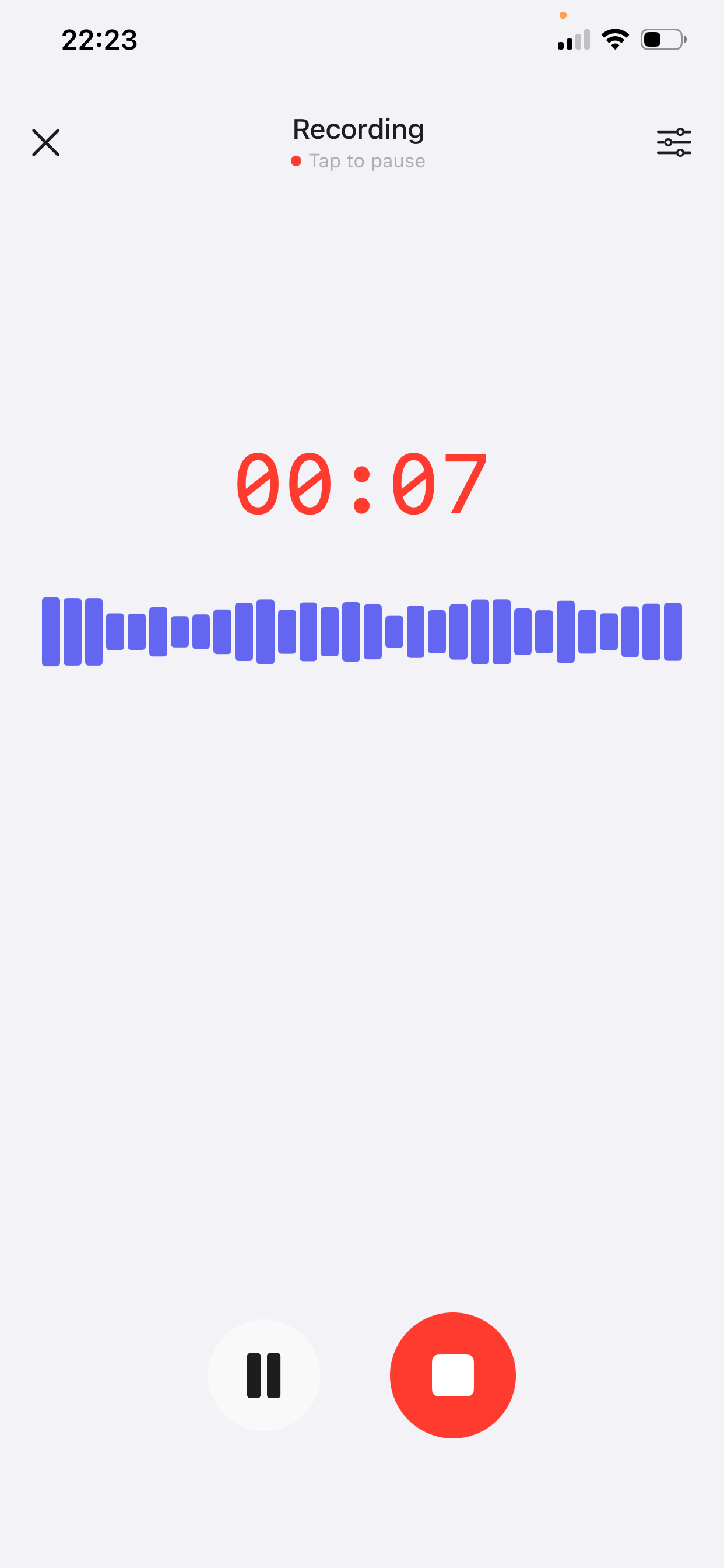
Step 1 — Record the thought, not the post
Open VoiceNote, tap the mic and say the whole thought once. Aim for one to two minutes. The free plan records up to two minutes per note; Prime extends a single recording to fifteen.
- Lead with the claim. Say the sentence you would say to a friend: “Our onboarding emails were early, not bad.” Everything after it is evidence.
- Say the number or the detail out loud. Exact numbers survive editing. Vague ones get cut because nobody can check them.
- Do not dictate punctuation. Talk; the transcript handles the rest. Saying “comma” makes you write, not speak.
- Keep the aside. The aside is often the most human line in the post. Decide later whether it stays.
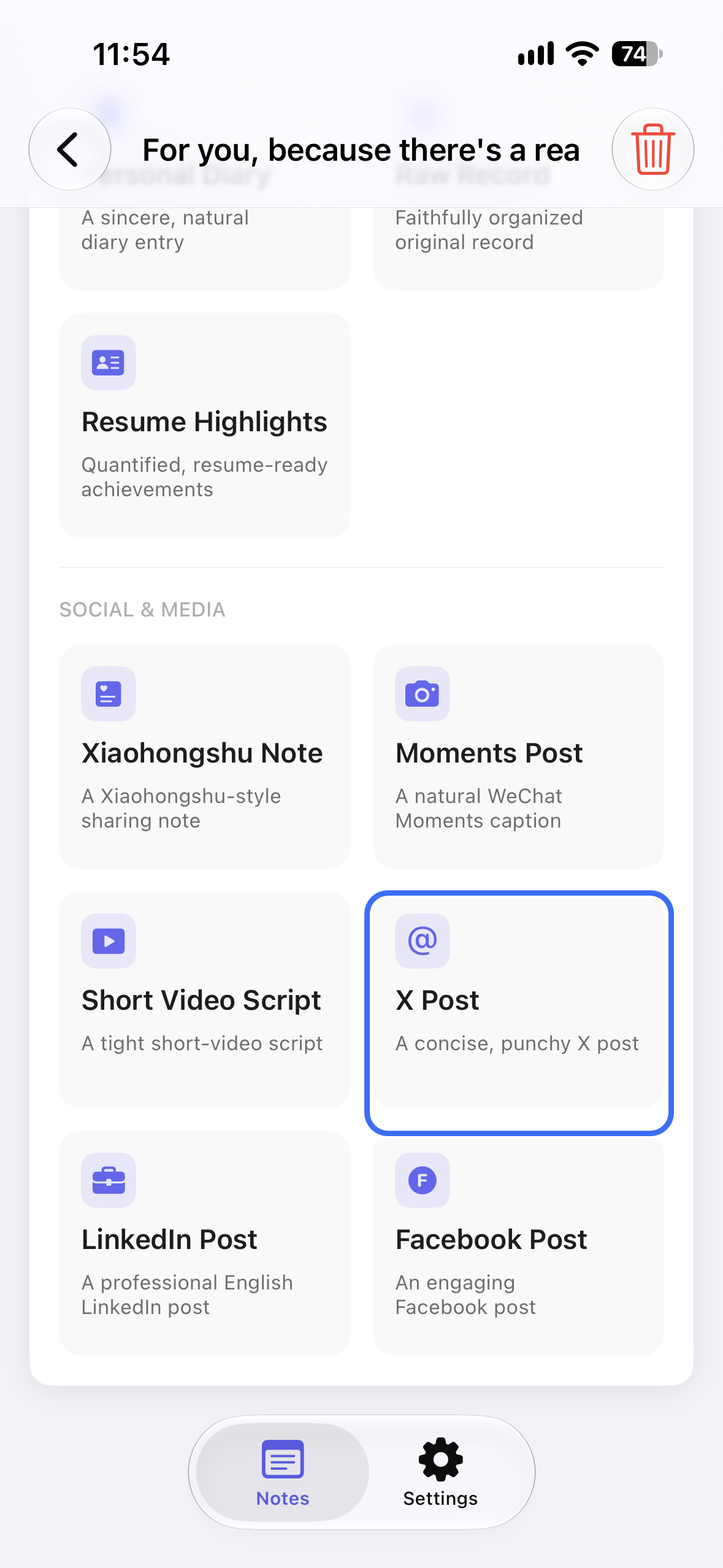
Step 2 — Apply X Post
Open the note, tap AI Style Conversion and choose X Post. The style compresses the transcript into a concise, punchy post in your own words.
It does not know what your audience has already read, which claim is load-bearing, or whether the number is right. It may also smooth a sharp opinion into a neutral one — check that the first line still says something. Treat every new hashtag, emoji or statistic as a choice you did not make.
One useful rule: if the output is shorter than your point, the point was not in the note. Record it again with the claim first.
Step 3 — Read it aloud and cut
Read the draft at speaking pace. The line where you run out of breath is the line to split. The sentence you skip is the sentence to delete. Then make one more pass: cut the first sentence if it is throat-clearing, and cut the last if it only summarises what you just said.
Post when the draft sounds like something you would actually type in a group chat — not like a company account.
Why a voice note makes a better first draft
When you type a post, you edit while you think. The first sentence becomes a thesis statement, the second a caveat, and by the fourth you are writing for the people who might disagree. The result is defensible and forgettable.
Speaking removes that imagined audience from the room. You say the thing you actually mean, then hear yourself say it. The transcript is messy, but the argument is yours. A voice note also keeps the details you would have edited out — the number, the customer’s words, the small failure — and those are usually what make a post readable.
The catch: a transcript is not a post. It has false starts, repeated words and a long runway. That is the part the style handles.
A worked example
A made-up note, to show the shape. The speaker is a founder explaining an onboarding change.
Spoken note
“Okay, the onboarding emails. We send five and nobody reads past two. I kept thinking the copy was bad, but it is not the copy. People sign up and then they do not use the product, so the first email explains features to someone who has not had a first win yet. We changed email one to ask for one action — connect a calendar — and nothing else. Activation went from 31 to 44 percent. Not huge, but it is the first thing that has moved in months. The lesson is not ‘shorter emails’. It is that we were writing to the wrong moment.”
X post
Our onboarding emails weren’t bad. They were early.
We explained features to people who hadn’t had a first win yet.
Email one now asks for one action. Activation: 31% → 44%.
The lesson isn’t “shorter emails”. It’s that we wrote to the wrong moment.
What changed: the claim moved to the front, the thinking-out-loud sequence disappeared, and the number stayed. The opinion at the end survived — check that yours does too.
Five checks before you post
- First line test. Could a stranger repeat your claim after reading only line one? If not, that line is setup, not the post.
- One idea. If there are two, write two posts. A split post is clearer than a compressed thread.
- One concrete detail. A number, a date, a name, a tool. Abstractions slide past; specifics stick.
- Cut the runway. “I have been thinking a lot about…” and “Just wanted to share…” can go. The reader does not need the walk to the microphone.
- Check the facts. Verify every number, name and causal claim. Compression can turn “we think” into “we know”.
Mistakes to avoid
- Posting the raw transcript. It reads like a meeting, not a thought. The compression is the work.
- Letting the style round off the opinion. Neutral is safe and invisible. Put the edge back in the first line.
- Recording without a claim. A note that circles a topic produces a post that circles a topic.
- Adding hashtags to rescue a weak line. Tags do not make a first sentence interesting.
- Turning every note into a thread. A thread needs one idea per post. If you cannot give each post its own edge, it is one post.
Frequently asked questions
Can VoiceNote write an X post from nothing?
No. It starts from your recording. The claim, the detail and the opinion have to come from you; the style handles the compression.
How long should the recording be?
One to two minutes is enough for a single post. The free plan records up to two minutes per note; Prime extends a single recording to fifteen.
Will the post still sound like me?
It works from your words, so the vocabulary is usually yours. Read it aloud and restore any phrase the style flattened; that is the fastest way to keep your voice.
Does it add hashtags or emojis?
Treat anything you did not say as optional. Keep a tag or an emoji only if you would have chosen it yourself.
Can I use it for a thread?
Yes, but record each post separately, or record the whole argument and split it after. A thread is not a transcript cut into pieces; each post needs its own first line.
Which languages does VoiceNote support?
VoiceNote transcribes 46 languages. Write and post in the language you speak; the style names in the app stay in English.
If the thought is meant for a room rather than a feed, the same recording can become a speech draft. And if it is a message to one person, start with a professional email instead.
Talk the post before you type it
Download VoiceNote, record the thought, and turn it into a post you can edit instead of a blank box.
Download on the App Store