Key takeaways
- Your Facebook audience already knows you — skip the credentials and start with the moment.
- Only the first two or three lines show before “See more”. They have to earn the tap.
- The style drafts the post; the cut — scene, one line, question — is what makes it readable.
- Comments are the second half of a Facebook post. End with something people can answer.
Facebook is the one feed where nobody needs convincing that you exist. Your old colleagues, your neighbours and the person you sat next to in school are already there. That should make posting easier, and it usually makes it worse: people write announcements for an audience of strangers, and their friends scroll past.
Talking fixes the register before it fixes the wording. You would not say “I'm thrilled to share that…” out loud to a friend, and you can hear it when you try.
How to do it in VoiceNote
Step 1 — Record the moment, not the moral
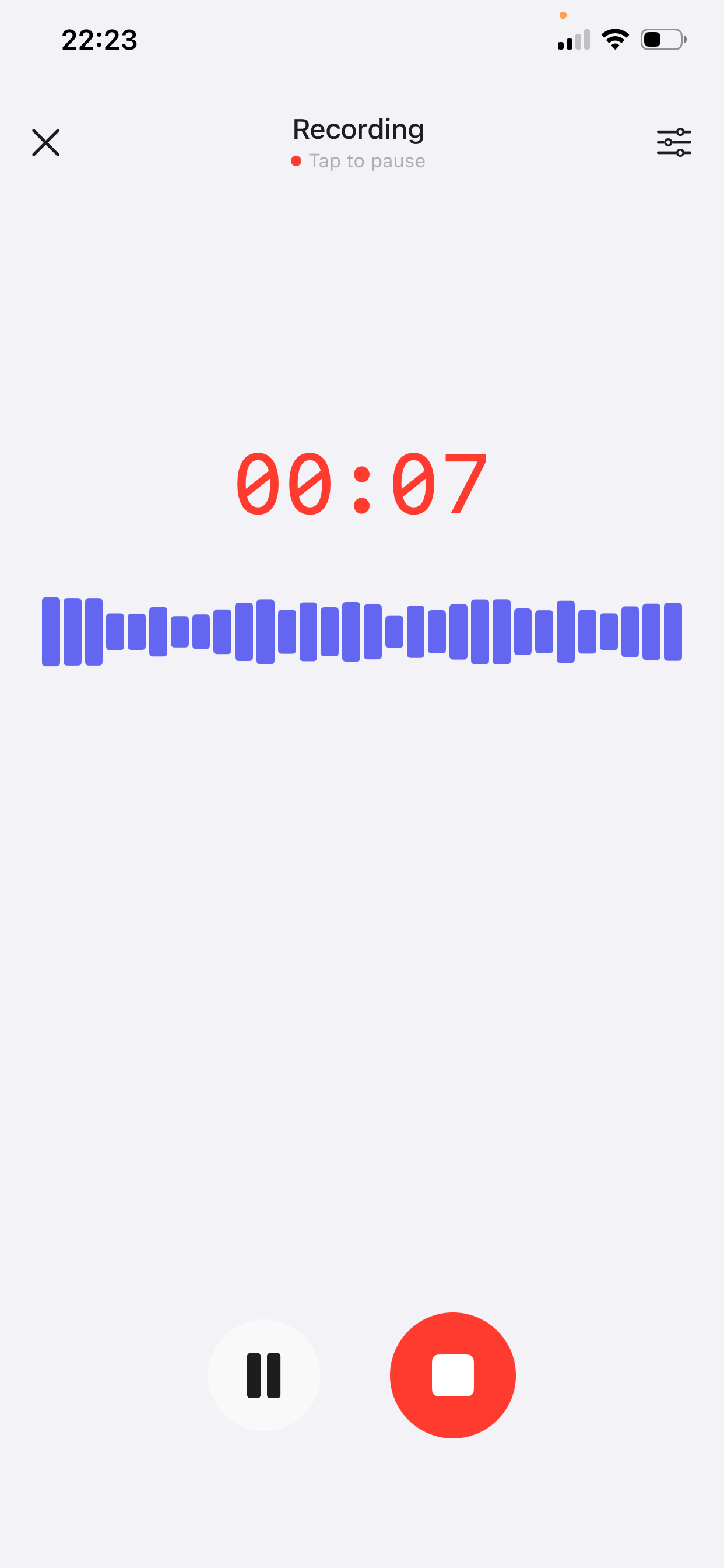
Open VoiceNote and tap the mic. Tell the story the way you would tell it at dinner: what happened, where you were, the small detail nobody would invent. One or two minutes is usually the right length. The free plan records up to two minutes per note; with Prime a single recording runs to fifteen, so if you ramble, start a fresh note rather than editing a long one.
- Start in the middle. “The shelves arrived at ten and the shop was still full of boxes” beats “I'm happy to announce the refurbishment of my bookshop.”
- Say the detail you would only tell a friend. The wrong colour, the customer who helped, the thing that went wrong. That detail is what makes the post yours.
- Do not explain why it matters yet. The meaning is easier to add later than to remove.
- Say who is in the story. If a friend or a customer appears, say so out loud — you will need that list when you decide what is appropriate to publish.
Step 2 — Apply Facebook Post
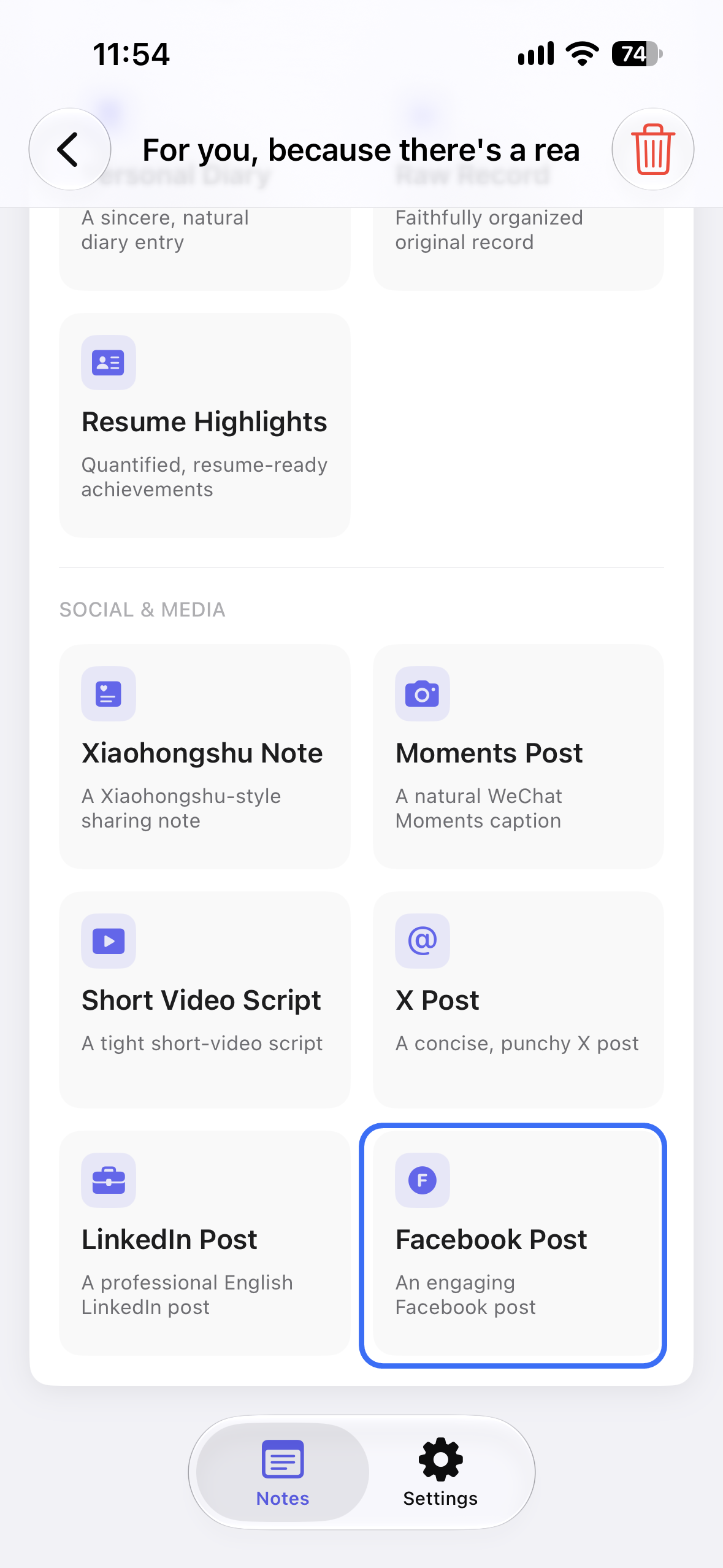
Open the note, tap AI Style Conversion and choose Facebook Post. The style shapes the recording into an engaging post: your story, in a conversational register, short enough to be read in a feed.
Read the draft as a stranger would — not the stranger who found you through search, the one who last saw you at a wedding. Anything that sounds like a press release goes. Anything that sounds like you stays, even if it is less tidy.
The style cannot know your friends, your shop or your week, and it will not tell you whether a detail is appropriate to publish. That judgement is yours, especially for anything involving other people.
Step 3 — Cut it to a scene, a line and a question
Three parts, in this order: the scene, one line of context, one question. Everything else is optional.
- The scene — the first two lines, because that is all that shows before “See more”. Put the moment there, not the announcement.
- One line of context — why it happened, who it was for, how long it took. One sentence; this is where most posts turn into reports.
- One question — answerable by the people who will actually read it. “What did your first week look like?” gets replies; “Let me know what you think!” gets likes.
Then check it once for other people's privacy: names, faces, anything a friend told you in confidence. If it belongs to someone else, either take it out or ask them first.
Why talking suits Facebook specifically
Facebook posts drift towards two failures. One is the announcement: a paragraph written for a company page, posted by a person. The other is the performance: a story shaped so its lesson arrives on schedule.
Speaking avoids both, because speech is bad at sounding official and good at being specific. When you say a thing out loud you include the awkward detail, and the awkward detail is what your friends respond to.
It also matches how the post will be read: on a phone, in a feed, between a photo of someone's dog and a local event. A post that sounds like a voice belongs in that stream. A post that sounds like a press release interrupts it.
A worked example
A made-up example. A bookshop owner records two minutes the evening the new shelves arrive.
Spoken draft
“Okay, it's Tuesday evening, the shelves finally came. They were meant to arrive at ten and they got here at four, so the shop was full of boxes all day and I had to keep apologising to people. Two of them stayed and helped me carry the new ones in — the retired teacher who comes in every Thursday and a man called… actually don't use his name. The shelves are the wrong colour. I ordered oak and they sent something closer to orange. I've decided I like them. My father built the original ones in 1991 and they were orange, so.”
Facebook post after the cut
The shelves arrived at four instead of ten, so the shop spent Tuesday full of boxes and I spent it apologising.
Two customers stayed to help carry them in. They are also the wrong colour — I ordered oak, they sent orange. My father built the originals in 1991 and they were orange too, so I've decided to call it a family tradition.
If you've been in this week and climbed over a box, thank you. What's the most useful thing a customer has ever done for you without being asked?
What changed: the announcement disappeared, the awkward detail stayed, and the last line is a question people can answer in a sentence.
Before you post
- Read the first two lines on a phone. That is the version most people will see.
- Check every name and photo. Ask before you publish someone else's story.
- Decide whether the post needs a photo at all. A photo of the real thing beats a graphic with a quote on it.
Mistakes to avoid
- Writing to strangers. Nothing kills a Facebook post faster than explaining context your friends already have.
- Burying the moment below the fold. If the scene starts in line five, it does not exist.
- Ending with a call to action from a marketing playbook. “Check the link in bio” is for other platforms.
- Polishing until the voice disappears. If it does not sound like something you would say, it is not finished — it is over-edited.
- Publishing someone else's detail to make the story better. The story is not worth it.
Frequently asked questions
How long should a Facebook post be?
Long enough for the scene, short enough to finish in a feed — usually 80 to 150 words. The style will produce something around that; trim it if the point arrives late.
How is this different from an X post?
An X post compresses to one line and has to land instantly. A Facebook post is read by people who know you, so it can hold a small story — and the comments matter as much as the post.
And from a LinkedIn post?
LinkedIn rewards a professional lesson with evidence. Facebook rewards a moment with personality; the lesson is usually the part to cut.
Should I use hashtags?
Rarely. One or two at most, and only if they mean something to the people reading. They will not rescue a post nobody wants to read.
Can VoiceNote write the post in another language?
VoiceNote transcribes 46 languages, and the output follows the language you recorded in. Check the result before posting — if your friends write in a mix of two languages, the draft will not do that for you.
What about a post that mentions other people?
Record first, decide second. Say the names out loud while recording so you have the list, then remove or ask before anything goes public.
If the post is for a wider audience than your friends list, a tighter version for X is usually worth writing from the same recording.
Write the post the way you would tell it
Download VoiceNote, record the story out loud and turn it into a Facebook post that sounds like a person rather than a page.
Download on the App Store