Key takeaways
- Minutes are not a transcript: record what was decided, who owns it, and by when.
- Ask before you record, and say names out loud — transcription cannot tell voices apart.
- Five parts: attendees, decisions, action items (owner + date), open questions, next meeting.
- An action item without a name and a date is a wish. Send the minutes the same day.
Most meetings end the same way. A lot was said, several things were agreed, and nothing was written down. The person who took notes leaves with a voice note full of good material and no time to turn it into anything.
The fix is not a better transcript. It is a smaller document. A forty-minute meeting usually produces three decisions, five action items and two open questions — about one page. Getting from the recording to that page is a repeatable ten-minute job.
Why a transcript is not minutes
A transcript is evidence. It is a poor document. It keeps the order of the conversation, so the digression about the office move sits between two decisions about the launch. It gives every sentence the same weight, including the ones nobody meant. And it attributes nothing: without speaker labels, you cannot tell who promised what.
Minutes do the opposite. They throw almost everything away and keep the four things people will look for next week: what was decided, who has to do something, by when, and what is still unresolved.
It is the same gap as writing an email from a spoken note — the raw words are the material, not the message. The difference is that minutes have a fixed shape, which makes the job easier, not harder.
Before you record: consent and setup
Two things happen before anyone presses record.
- Ask. Say plainly that you are recording a voice note to write up the minutes, and that the audio stays on your phone. If someone objects, take handwritten notes instead. Many places require everyone's agreement to record a conversation, so asking is both the polite option and often the legal one. Follow your company's policy.
- Set the shape. If the meeting is short, one note is enough. If it runs longer than your recording limit, take one note per agenda item. The pause between items is a natural break, and short notes are far easier to review later.
One more habit that pays off: say names out loud when you summarise. “Alex will send the pricing sheet” survives transcription. “He'll send it” does not.
How to do it in VoiceNote
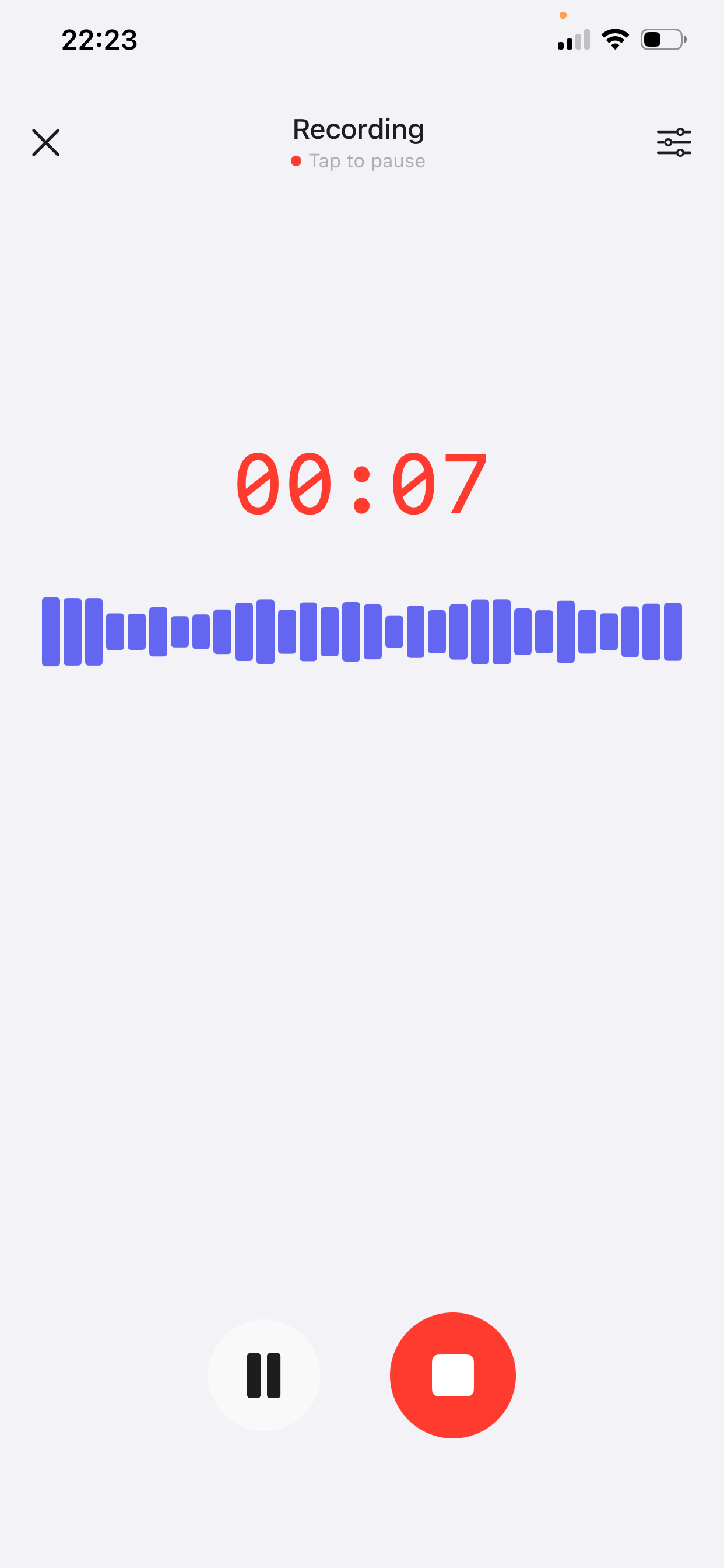
- Record the recap while it is fresh. Open VoiceNote (first time? Download it here), tap the mic, and narrate what happened — ideally in the five minutes after the meeting. Do not replay the whole conversation. Say what you would tell a colleague who missed it.
- Watch the length. The free plan includes 10 notes of up to 2 minutes each; Prime removes the note limit and extends recordings to 15 minutes. A 45-minute meeting becomes three or four notes, one per agenda item — which is easier to reread anyway.
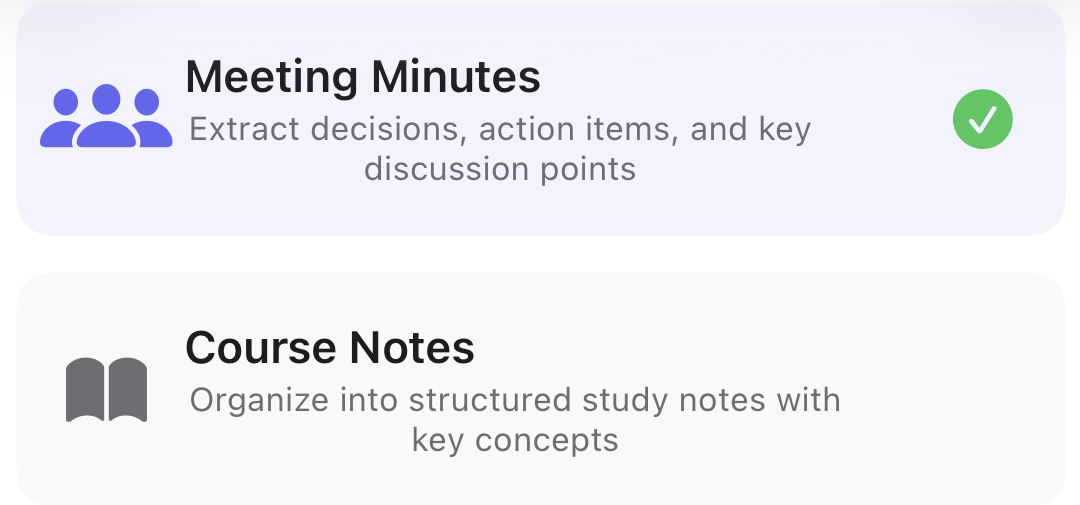
- Tap Meeting Minutes. The style in VoiceNote extracts decisions, action items and key discussion points, and drops the rest.
- Fix the three things it cannot know. Names, spelled against your attendee list. Dates, ideally said out loud during the recap. And whether something was decided or merely proposed.
- Send it the same day. Post it in the project channel with one line: “Corrections by end of day, otherwise this stands.” That sentence is what makes the document official.
The five parts of usable minutes
Order matters. Decisions go first, because that is the only part most people read.
- Attendees. Names, and roles if the list travels outside the team. Note absences only when they matter.
- Decisions. One line each, past tense, no discussion: “Launch moves to 21 November.” If it was still a proposal, it belongs in open questions.
- Action items. Task, owner, date. “Alex sends the revised pricing sheet by Friday 24 October.” No owner means it is not an action item — it is a hope.
- Open questions. What is unresolved, and who will resolve it. This is the section that stops the same discussion from restarting next week.
- Next meeting. The date, or the words “no date set”. Both are useful; silence is not.
A worked example
Here is the spoken recap — messy on purpose, the way a real one sounds twenty minutes after the meeting ends.
Spoken recap
“Okay, launch sync with Priya, Alex and Marco, Tuesday the 21st, about thirty minutes. Um — we're moving the launch from the 14th to the 21st, as long as legal signs off, and Priya's checking that by Wednesday the 22nd. The onboarding emails go out with the launch, not after it. Alex is sending the revised pricing sheet by Friday the 24th. Marco does the final read of the onboarding emails before Monday the 20th. We still haven't decided who briefs the agency, that's still open. Next meeting Tuesday the 28th at ten.”
Minutes, after the style is applied
Launch sync — minutes
Decisions
- Launch moves from 14 to 21 November, pending legal sign-off.
- Onboarding emails ship with the launch, not after it.
Action items
- Alex — send the revised pricing sheet by Fri 24 Oct
- Marco — final read of the onboarding emails by Mon 20 Oct
- Priya — confirm legal sign-off by Wed 22 Oct
Open questions
- Who briefs the agency? Not assigned yet.
Next meeting
- Tue 28 Oct 2026, 10:00.
What changed: a spoken paragraph became five lines someone can act on — every action has a name and a date, and the unresolved question is written down instead of forgotten.
How to keep it to one page
- Cut the discussion. If a point needs a paragraph, it was an argument, not an outcome. Arguments are worth having; they are not worth minuting.
- Use names, not teams. “The design team” is a place to hide. A person is accountable.
- Write dates, not intervals. “By 24 October” survives a week. “Next week” does not.
- Keep one line of context per decision. Enough that someone who missed the meeting can follow it, no more.
- Send it fast. Minutes are read while the meeting is still the thing people remember. A week later, nobody will correct them and nobody will act on them.
Mistakes to avoid
- Recording without saying so. It is bad practice, and in many places it is unlawful. Ask, every time.
- Minuting the meeting instead of the outcomes. A transcript with headings is still a transcript.
- Action items with no date. A task without a deadline is a suggestion.
- Trusting names and numbers. Transcription does not know your colleagues. “Priya” arrives as “Pria” more often than you would like.
- Deciding for the room. If you are not sure something was agreed, write it under open questions. The minutes are not the place to settle it.
Frequently asked questions
Is it legal to record a meeting?
It depends on where you are and who is on the call. Many jurisdictions require everyone's consent; some require only one person's. Ask first, say why you are recording, and follow your company's policy. A one-line ask at the start of the meeting is also the polite version.
Does VoiceNote tell speakers apart?
No — there are no speaker labels, and minutes rarely need them. You are recording the outcomes, not a transcript. Say names out loud when you recap (“Alex will send…”), and restate the owner in each action item.
My meetings run 45–60 minutes. Can it handle that?
Not as one recording. The free plan gives 10 notes of up to 2 minutes each; Prime has unlimited notes and recordings up to 15 minutes. For longer meetings, take one note per agenda item — three or four short recaps are easier to review than one long one anyway.
Which languages does VoiceNote support?
46 languages for both transcription and polishing, so you can recap in the language the meeting was held in.
Can I use it for client meetings?
Yes, with permission and one extra pass. Read the draft as if a colleague had written it, and remove anything internal, speculative or commercially sensitive before it leaves your team.
Leave the next meeting with minutes
Download VoiceNote, record a five-minute recap, and send the minutes while the meeting is still fresh.
Download on the App Store